
Routine maintenance
Filters, accessible coils and key components are inspected and cleaned as appropriate. We also check airflow, controller operation and the condition of the indoor and outdoor units.
Serving Cambridge, Waikato & surrounding areas
Mon–Fri 8am–6pm · Sat 9am–2pm
Practical maintenance, fault diagnosis and repairs that help your system run reliably through warm, humid summers and cold Waikato mornings.
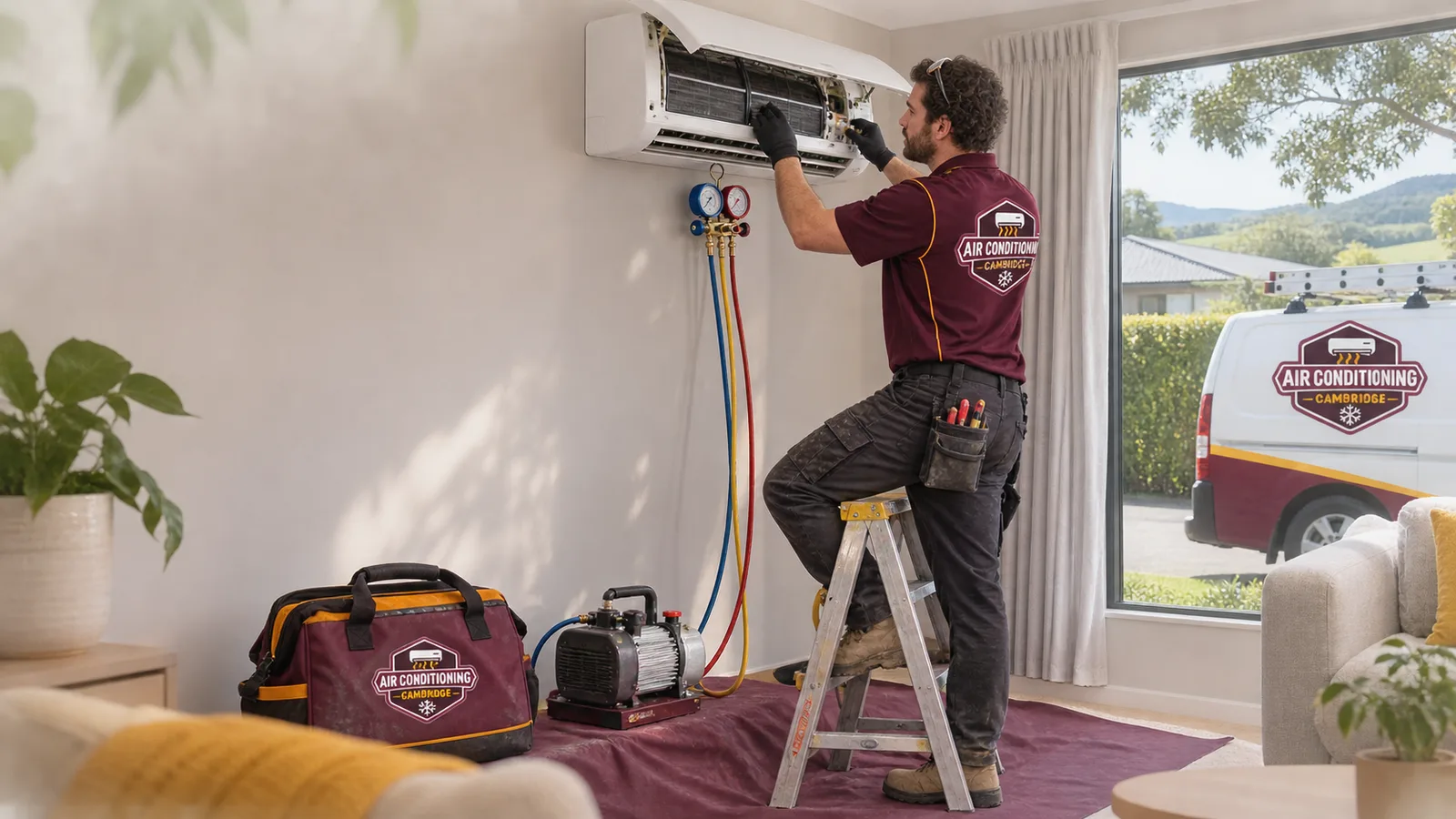
A professional air conditioning service in Cambridge keeps equipment clean, checks operation and finds developing faults before they turn into inconvenient breakdowns. Air Conditioning Cambridge services heat pumps and air conditioning systems in homes, offices, shops and other light-commercial properties.
As Cambridge's air conditioning specialists, we approach each job as a technical inspection rather than a quick filter clean. The work may include checking airflow, cleaning indoor filters and accessible coils, inspecting the outdoor unit, testing controls, listening for unusual compressor or fan noise and checking for signs of condensate trouble. If a fault is present, we explain what was found and what repair is recommended.
Cambridge conditions put systems through contrasting workloads. Cooling is valuable during warm, humid weather, while heating demand rises on frosty Waikato mornings. Regular attention helps equipment switch between those duties without restricted airflow, blocked drainage or accumulated dirt undermining performance.
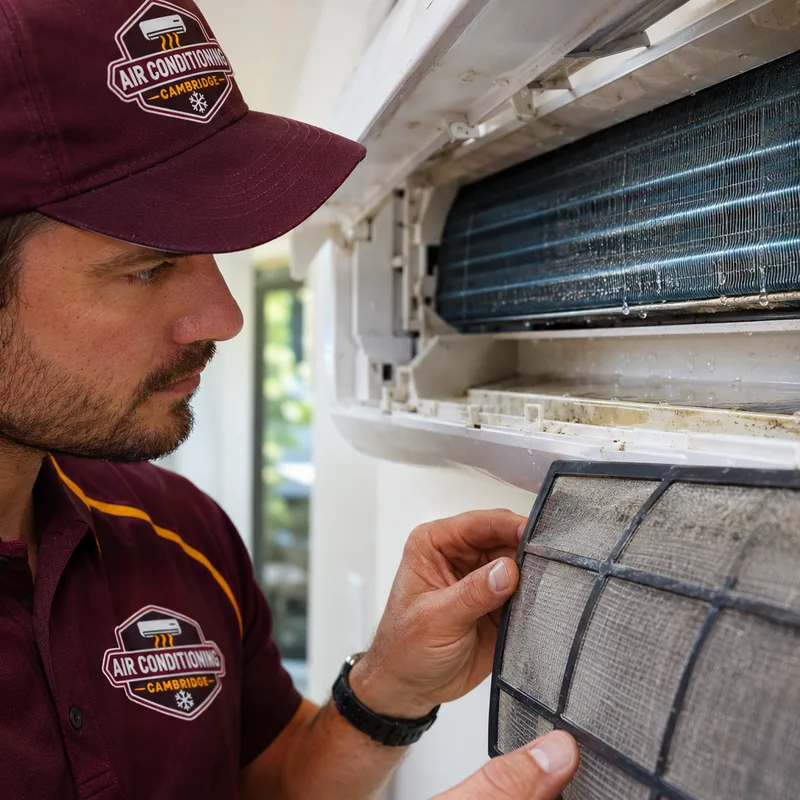
Filters, accessible coils and key components are inspected and cleaned as appropriate. We also check airflow, controller operation and the condition of the indoor and outdoor units.
Weak airflow, unusual sounds, water leaks, error codes and poor temperature control are investigated methodically. Diagnosis may include electrical tests and operating checks rather than replacing parts on assumption.
Once the cause is confirmed, we outline the repair and any parts involved. Work can address failed controls, fan problems, drainage faults and other serviceable component issues, subject to equipment condition and parts availability.
We service common wall-mounted split systems and heat pumps used for heating and cooling individual rooms or open living areas.
Offices, retail premises and small workplaces need dependable temperature control. Servicing can be planned around access, trading needs and the type of installed equipment.
If room use, operating habits or equipment condition are affecting comfort, we provide practical guidance. Replacement is recommended only when repair, age or suitability makes it the sensible option.
Book a service if airflow has weakened, the unit takes longer to reach its set temperature, or it has started making a new sound. Musty odours can point to dirt or moisture inside the indoor unit. Water beneath a wall-mounted system may indicate a condensate drain problem, while repeated stopping, warning lights or error codes require proper diagnosis.
A dirty filter is sometimes the cause of poor airflow, but it is not the only possibility. A blocked indoor coil, fan fault, obstructed outdoor unit or control issue can produce similar symptoms. Continually running a system that is leaking water, tripping power or making harsh mechanical noises may worsen the fault. Switch it off and arrange an inspection.
Refrigerant is part of a sealed circuit. It is not a consumable that should need routine topping up. If a system is found to have low refrigerant, the underlying leak or circuit fault needs to be identified before any recharge is considered. Refrigerant work must be handled by an appropriately qualified technician.
Tell us what the unit is doing, when the problem began and whether any error code is displayed. Equipment make, model and access details help us prepare for the visit.
The technician checks the equipment condition, airflow, controls, drainage and relevant electrical or operating components. Testing is guided by the symptoms and system type.
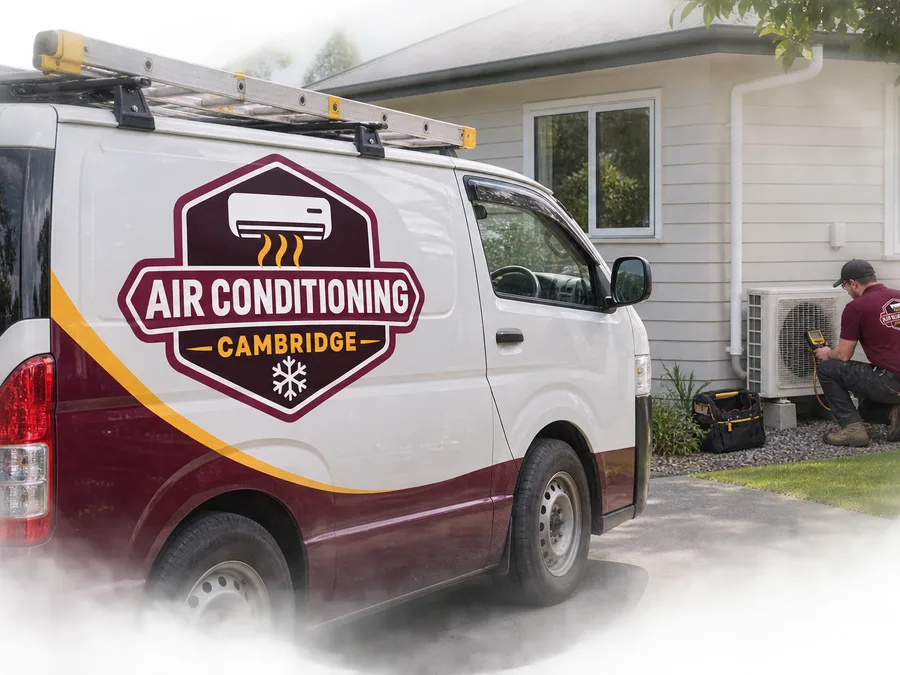
Routine service items are cleaned where suitable, including filters and accessible heat-exchange surfaces. The outdoor unit is checked for debris and airflow restrictions.
You receive a clear account of the system's condition. If repair work or a part is needed, the recommended next step is discussed before additional work proceeds.
After servicing or an approved repair, the system is operated to check response, airflow and temperature control. We can also suggest filter care and sensible operating settings.
Service requirements depend on how a system is used and where it is installed. A heat pump running daily in a family living room usually collects dust faster than a unit used occasionally in a spare room. Commercial systems can face longer operating hours and may need maintenance planned around occupancy and access.
Cambridge contains established homes, newer subdivisions, rural-edge properties and a busy town centre. Those settings create different practical considerations. An older home may have a unit installed high on a wall with limited access, while a new open-plan house may rely heavily on one system for a large living zone. In the town centre, servicing may need to account for customer areas, workspaces and outdoor units positioned near pedestrian or delivery activity. Properties around Leamington can include a mix of established and newer housing, so system age and installation layout should be assessed rather than assumed.
Owners can help between professional visits by cleaning washable filters according to the manufacturer's instructions, keeping furniture and curtains clear of the indoor unit, and removing leaves or other loose debris from around the outdoor unit without opening it. Do not spray water into electrical areas or dismantle covers. If access requires a ladder or the equipment shows a fault, leave the inspection to a technician.
An air conditioner moves room air across a heat exchanger. When filters or coils are loaded with dust, airflow can fall and the system may need to run longer to achieve the selected temperature. Cleaning appropriate components and checking the fan, louvres and outdoor airflow helps the equipment operate as intended.
Drainage matters during cooling because moisture condenses on the indoor coil and must flow away through the condensate system. A restricted drain can cause dripping, staining or an automatic shutdown on equipment fitted with a safety device. Drain condition and discharge should therefore be checked when symptoms or the installation call for it.
Settings also affect comfort. Extreme setpoints do not make a correctly operating unit cool or heat instantly. A moderate target, suitable fan setting and unobstructed airflow generally produce steadier room conditions. For homes exposed to damp Waikato winters, heating mode can improve warmth, while dry mode may assist with moisture removal in suitable mild conditions. It does not replace ventilation or repairs to building moisture problems.
A repair is often reasonable when the system suits the room, its main components are in sound condition and the required part is available. Maintenance is appropriate when the equipment operates but has dirty filters, reduced airflow, drainage concerns or overdue inspection needs.
Replacement may be the better decision when a system has a major component failure, repeated faults, significant corrosion, unavailable parts or poor capacity for the area it is expected to condition. Installation quality and room needs matter too. An oversized or undersized unit can cycle poorly or struggle to provide even comfort, and servicing cannot correct a fundamental capacity mismatch.
We base the recommendation on observed condition and test results. Air Conditioning Cambridge can explain whether a targeted repair is worthwhile, whether maintenance is likely to restore normal operation, or whether obtaining replacement options is the more practical next step.
If your system is overdue for maintenance or has started behaving differently, arrange an assessment before the next spell of heavy heating or cooling use.
Call to ScheduleThe price depends on the system type, number of units, access and whether you need scheduled maintenance or fault diagnosis. A straightforward wall-mounted split-system service usually takes less labour than investigating an intermittent electrical fault or servicing several commercial units. Any repair parts, refrigerant work or specialist access can change the price. The scope and cost should be confirmed once the equipment and symptoms are understood.
The right interval depends on operating hours, dust exposure, occupancy and the manufacturer's maintenance guidance. A system used daily for both heating and cooling generally needs attention sooner than one used occasionally. Cambridge's warm-season cooling and winter heating demands mean many systems work during much of the year. Clean user-accessible filters between visits as directed in the equipment manual.
Yes, poor cooling can be diagnosed through airflow, temperature, control and equipment checks. Possible causes include dirty filters or coils, fan trouble, sensor faults, outdoor airflow restriction or a refrigerant-circuit problem. A technician should identify the cause before parts are replaced or refrigerant work is considered.
Yes, turn the unit off if water is entering the room or approaching electrical fittings, then arrange an inspection. Cooling produces condensate, but it should drain safely outside. A blocked drain, dirty coil, damaged drain connection or installation issue can cause leakage. Protect nearby flooring and furnishings without opening the unit.
A routine visit for one accessible wall-mounted system may take around an hour, while fault finding or servicing multiple units takes longer. Equipment type, contamination, roof or ceiling access and intermittent symptoms all affect timing. Commercial work may also be scheduled to reduce disruption to staff and customers.
Yes, servicing is available for residential and light-commercial air conditioning within the Cambridge area. Homes commonly use high-wall split systems, while workplaces may have multiple units or different access requirements. The equipment details and property use are discussed first so the visit can be planned properly.
Refrigerant should not be added without determining why the sealed circuit is low. Loss of refrigerant indicates a leak or another circuit issue that requires qualified assessment. The technician must consider the refrigerant type, equipment condition, repairability and applicable handling requirements before recommending further work.
Describe the system, its symptoms and when it was last serviced. We will help plan the appropriate maintenance or diagnostic visit for your Cambridge property.