
Little or No Cooling
The fan may run while the room stays warm, or the supply air may be only slightly cooler than the room. Testing is needed to distinguish an airflow restriction from sensor, compressor or refrigerant-circuit trouble.
Serving Cambridge, Waikato & surrounding areas
Mon–Fri 8am–6pm · Sat 9am–2pm
Prompt fault finding and practical repairs for split systems, heat pumps and ducted air conditioning, with a clear explanation before work begins.
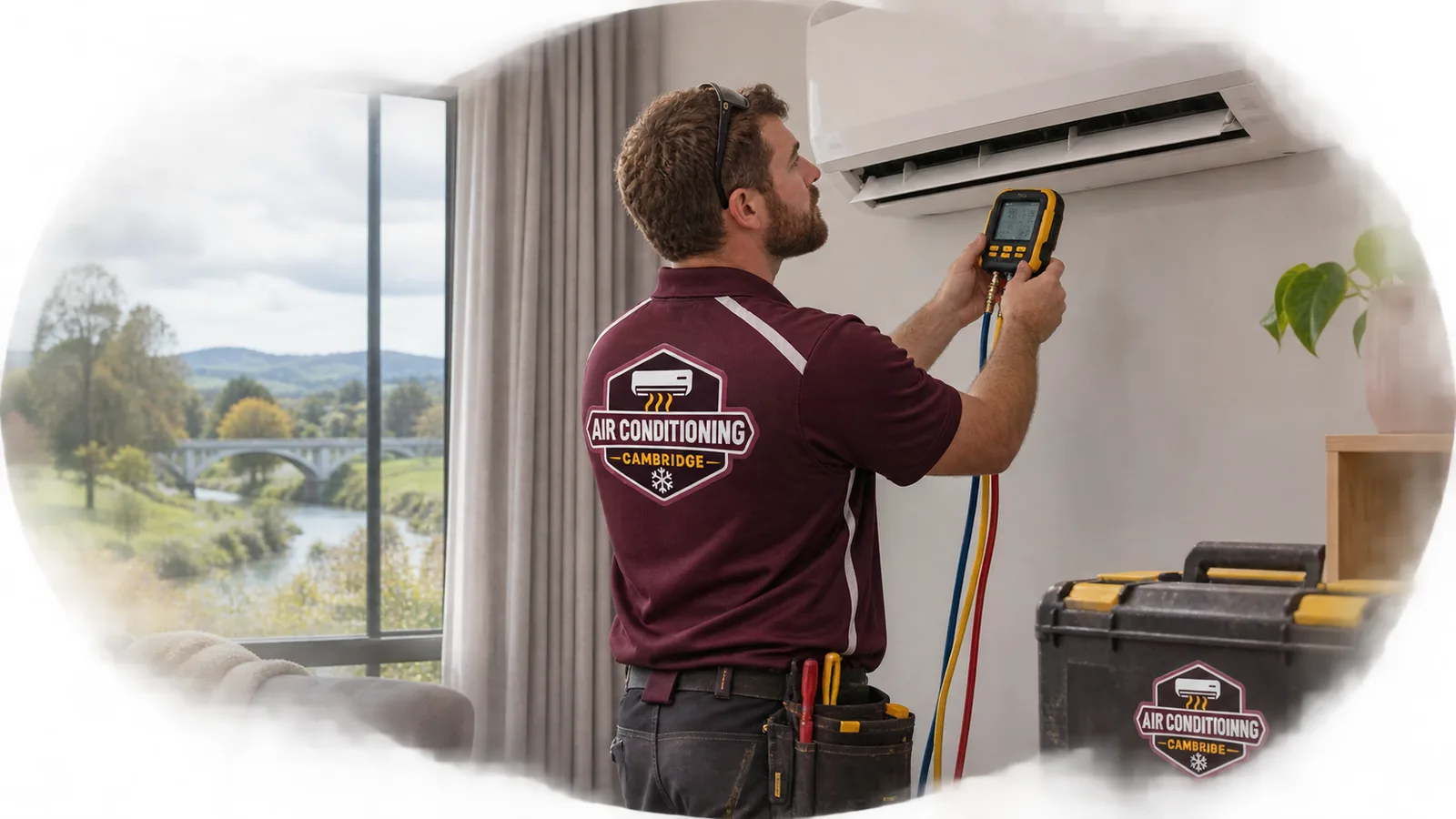
When cooling is weak, airflow has dropped or the system will not start, prompt air conditioner repair in Cambridge can prevent a minor fault from becoming more expensive. Air Conditioning Cambridge diagnoses faults in residential and light commercial split systems, heat pumps and ducted units. The aim is to identify the cause, explain the repair and restore dependable operation without replacing parts that still work.
We begin with the symptoms you have noticed, and Cambridge's trusted air conditioning team then tests the equipment rather than relying on assumptions. That may include checking operating modes, filters, airflow, electrical connections, sensors, condensate drainage and system pressures where appropriate. If a repair is practical, you receive a clear account of the work required. If age, condition or unavailable parts make replacement the more sensible option, we explain why.
Cambridge experiences warm, humid summer conditions that can place sustained demand on cooling equipment. Winter operation also matters because many local systems are reverse-cycle heat pumps used for heating. A fault can therefore affect comfort in more than one season, making accurate diagnosis more useful than a temporary reset.
A system that runs but does not cool may have restricted airflow, a dirty indoor coil, an outdoor-unit problem, a faulty sensor or a refrigerant-circuit fault. Low refrigerant is not something that should simply be topped up without investigation. A sealed system does not consume refrigerant during normal operation, so low pressure can indicate a leak that needs to be located and assessed.
Water dripping indoors often points to a blocked condensate drain, poor drain fall, a damaged tray or ice forming on the indoor coil. Unusual rattling or vibration can come from loose panels, fan components or the outdoor unit mounting. Buzzing, repeated clicking, tripped protection or a unit that starts and stops quickly can indicate an electrical or control fault.
Some apparent breakdowns have simpler causes, including clogged filters, incorrect remote settings or an activated timer. These checks still matter because restricted airflow can reduce capacity and cause the coil to freeze. A proper diagnosis separates routine cleaning from a component failure and confirms whether the unit is safe to run.
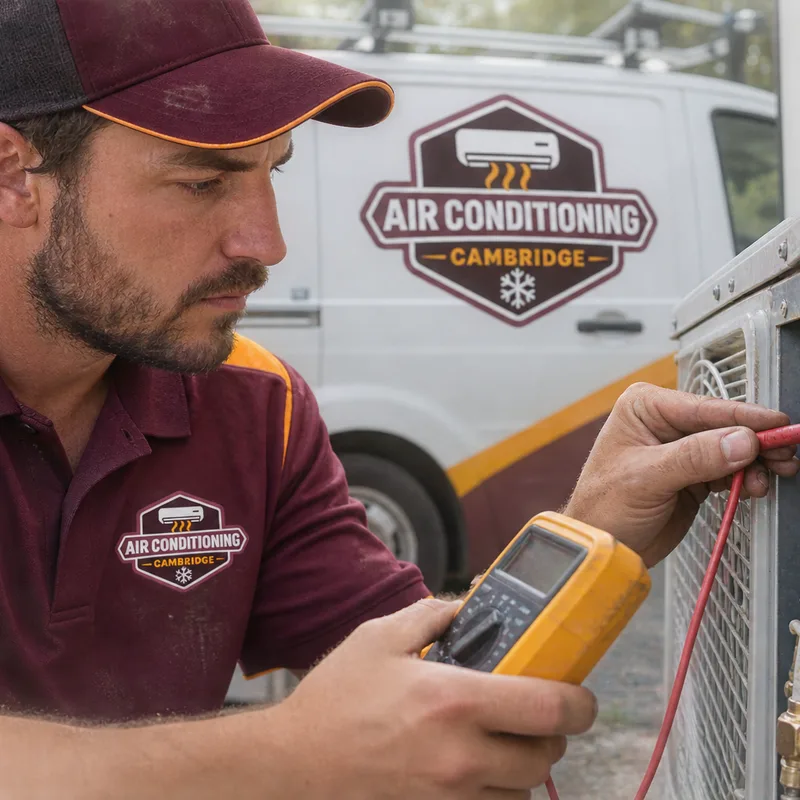
The fan may run while the room stays warm, or the supply air may be only slightly cooler than the room. Testing is needed to distinguish an airflow restriction from sensor, compressor or refrigerant-circuit trouble.
Switch the system off if water is reaching walls, flooring or electrical components. A blocked drain, frozen coil or damaged condensate component should be checked before operation resumes.
Grinding, strong vibration, electrical odours or persistent musty smells deserve attention. Stop using the unit if there is smoke, a burning smell or repeated electrical tripping.
Frequent starting and stopping can be linked to control faults, poor airflow, temperature-sensor problems or equipment that cannot complete a normal operating cycle.
Low airflow may result from a dirty filter, blocked coil, fan fault or duct issue. Continuing to run a restricted system can place extra strain on its components.
Record the code and avoid repeatedly resetting the power. The code helps direct testing, but it does not always identify the failed part by itself.
Tell us what the unit is doing, when the problem began and whether an error code appears. The make, model and location of the indoor and outdoor units also help us prepare.
The technician checks the reported symptoms and examines accessible components. Depending on the fault, testing may cover airflow, temperatures, controls, electrical readings, drainage and refrigerant pressures.
You receive an explanation of the likely cause and the recommended work. Where further testing, specialist parts or leak detection is required, that is identified before the repair proceeds.
Approved work is completed using suitable parts. The system is then run through an operating cycle to check airflow, temperature response, drainage and controls.
Before finishing, we outline any filter cleaning, operating changes or future maintenance that may reduce the chance of the same problem returning.
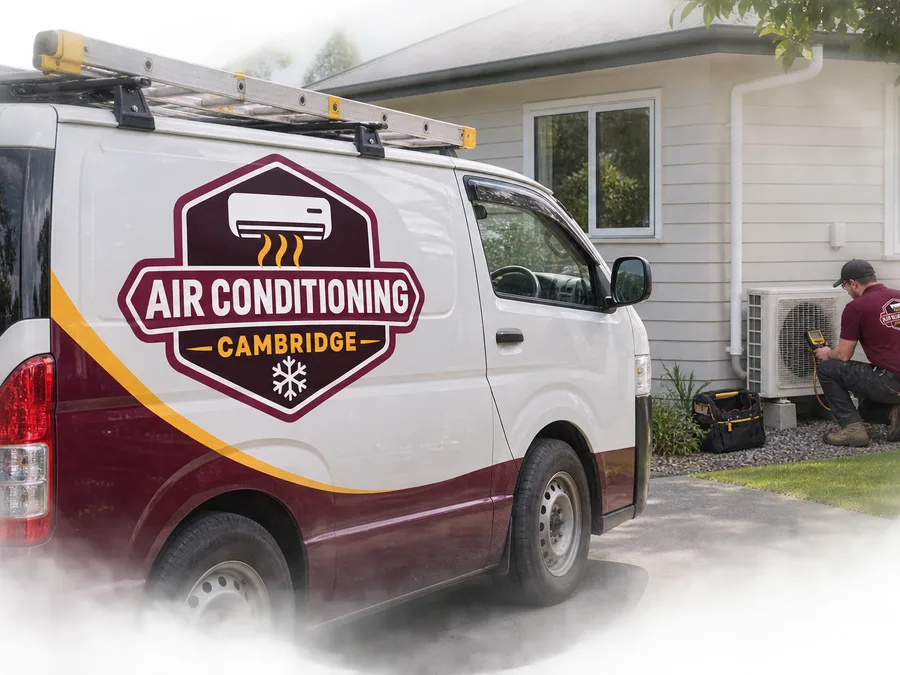
Cambridge properties contain a mix of equipment, including high-wall split systems in individual rooms, multi-split arrangements with several indoor units and central ducted systems. Access and configuration affect diagnosis. A high-wall unit may provide straightforward access to filters and controls, while a concealed ducted indoor unit can require ceiling-space access to inspect the fan, drain and return-air path.
Outdoor units also face practical site conditions. Leaves and grass can restrict the coil, while fences, stored items or dense planting can limit the clearance needed for airflow and servicing. In rural properties around Cambridge, longer travel distances, exposed outdoor installations and difficult access are useful details to provide when arranging a visit. In town, knowing whether the unit is mounted at ground level, on brackets or on a roof helps with planning.
For commercial premises, the time and conditions of the fault matter. Let us know whether the unit serves a customer area, office, treatment room or equipment space, and whether access is restricted during trading hours. This helps the technician plan safe testing with less disruption.
Repair is often appropriate when the fault is isolated, the rest of the system is in reasonable condition and compatible parts are available. Examples may include a failed sensor, drain blockage, control component or fan part. The right decision depends on the complete diagnosis rather than the age of the unit alone.
Replacement may deserve consideration when a major component has failed, corrosion or repeated leaks are present, faults keep returning, or essential parts are obsolete. Compressor and main control-board failures can involve substantial labour and parts costs. Older refrigerant types and poor overall condition can also change what is practical, but the refrigerant type by itself does not prove that a system must be replaced.
We compare the repair scope with the unit's condition and likely serviceability. You can then decide with a clear view of what the repair addresses, what it cannot correct and whether further work is likely. A repair recommendation should be specific enough to understand, not a vague instruction to replace the whole system.
Arrange a diagnostic visit when cooling drops, water appears or the unit develops an electrical fault. Early testing can limit damage and give you a clear repair plan.
Call to ScheduleAppointment timing depends on current demand, the fault and whether the system is safe to leave off. Cambridge cooling demand rises during hot weather, so providing the make, model, symptoms and error code can help with triage and preparation. Mention water leakage, electrical tripping, smoke or burning smells immediately.
The final cost depends on diagnostic time, access, the failed component, required parts and whether refrigerant leak testing is needed. A blocked condensate drain and a compressor fault involve very different work. The repair scope should be confirmed after testing, and parts that require ordering should be identified before further work proceeds.
Turn it off if there is water near electrical components, smoke, a burning smell, harsh mechanical noise or repeated circuit tripping. Do not keep resetting a breaker that trips again. If the issue is simply reduced cooling with no safety warning, continued operation may still worsen icing or strain, so it is safer to stop the unit and arrange diagnosis.
Yes, poor cooling can often be diagnosed while the unit still operates. The technician may compare return-air and supply-air temperatures, inspect filters and coils, assess fan operation and check the refrigerant circuit where required. Avoid washing internal electrical parts or adding refrigerant without finding the cause.
Yes, reverse-cycle heat pumps use the same refrigeration system to provide heating and cooling, so faults may affect one mode or both. In Cambridge, where the equipment may be used across summer and winter, testing should include the affected mode and relevant controls rather than assuming the problem is limited to cooling.
Provide the brand, model if visible, error code, fault symptoms and when the issue occurs. Also describe access to the indoor and outdoor units, especially if equipment is in a ceiling space, mounted high on a wall or located on a roof. Clear nearby furniture and keep pets away from the work area.
Refrigerant should not be added without assessing why the charge is low. Air conditioning systems are sealed, so a low charge can indicate leakage. The correct response may involve leak detection, repair, pressure testing and charging with the specified refrigerant by a suitably qualified technician.
Describe the fault, the type of system and any error code you can see. Air Conditioning Cambridge will help arrange the right next step for diagnosis and repair.